I just watched a scene from one of my favorite movies. Again. I must have run this movie a dozen times over the last few months. I’m not going to tell you what the movie was because it’s not an objectively great film, and you probably wouldn’t know it anyway. We all have films that we enjoy without quite knowing why. Sometimes it’s a peculiar mix of chemistry and mood that catches us, and we find ourselves going back one more time to savour the moment.
I’m not a naive film watcher. I’ve studied the history of film seriously and I’ve even taught it. I’ve seen a lot of the great movies and I can bore people with anecdotes about the pantheon directors, so this isn’t about cinematic moments. It’s about being in a place again—going back to a time and to a character or two who happen to inhabit that time. I know what they’re going to say, and it hardly matters anymore.
I don’t fully understand what’s going on here, but I can’t help noticing that it resonates with my fascination with time itself. My first novel was about a room frozen in time, and my most recent involves a blurring of the lines between past and present. I find myself going to this theme again and again as I write. It’s one of those things where the closer you look at a subject the more engrossing it becomes, and time is a fundamental in our lives.
They say that in order to really enjoy a work of fiction you have to ‘suspend your disbelief’. That means that you have to forget the puppeteer pulling the strings, as it were. You have to forget about the actors being paid well to pretend. You have to forget about the cuts and dissolves, the establishing shots and graduated close ups. I sometimes wonder how film critics do that. Even knowing that they are obliged to give a fair evaluation of a film, they have to sit there time after time and enter that trance-like state where the people on the screen are real and the critics themselves, with their popcorn and soda, are in the moment. If you think about it, it’s a kind of spooky magic.
I can do this trick with books too. I can pick up a much loved story and read a few pages and find myself melting into the ambience, the era, and the characters. If I have a crazy egotistical ambition as a writer, it’s to compose scenes that let a reader do that: inhabit the moment.
I’m tempted to see greater depths in this. The more I read about time and the ways that scientists are looking at it, the more I’m inclined to experience life as a series of particles or bundles. After all, that’s the way we remember things—not as a continuous flow but as scenes, moments even, that live in our minds. At the extremes of my memory—those youthful fragments we revisit as we get older—there are strangely packaged events like me sitting in bed looking at the Disney decals on my bedroom wall, or by the fireplace in my pyjamas reading a picture book by the moving light of glowing coals. As often as not these scenes don’t lead anywhere in particular. They don’t flow into the next moment. They don’t bubble up like Citizen Kane’s Rosebud. They’re vignettes—adrift in time, as it were.
We generate these packages of memory every day. Maybe the odd movie scene gets all jumbled up in our minds and takes on the stature of a memory. It would be nice if we could summon up our finest memories in 4K retina clarity, complete with sound. In the meantime, we can at least click on the Netflix link or the PVR list and there we are—back in a familiar coffee shop or walking familiar streets. The people we remember are there, talking with the same enthusiasm, looking at one another the same way, passing time with dear friends or feeling the first stirrings of passion.
When you get into this groove, it’s not a great leap to imagine time past as still existing ou
t there, beyond what someone has called ‘the wandering plane’. In the film Somewhere in Time, the hero just has to convince himself, through a sort of self-hypnosis, that he is in the early days of the Twentieth Century, and there he is, sitting up in bed rubbing the sleep out of his
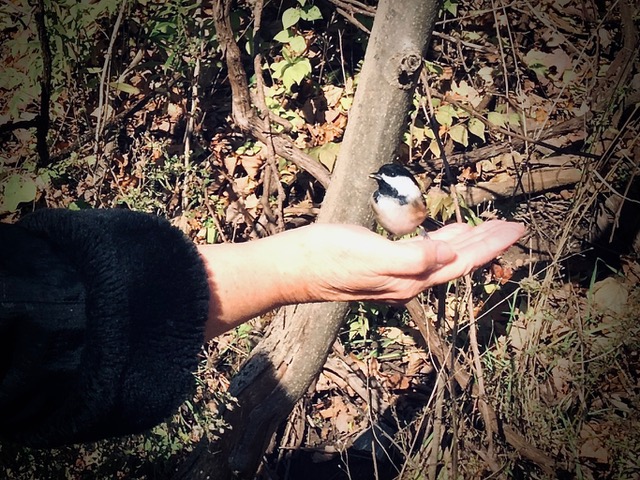
eyes. His hold on this notion is tenuous, but it’s enough for now. Other writers use a time machine that looks like it fell off a roller coaster, a bolt of lightning, or even a defective hot tub. It doesn’t really matter. The impulse is irresistible: to step off the relentlessly fleeting arrow of time and luxuriate for a while in a moment or two of our choosing. To hold it in our hands, delicately, as though it were a small bird snatched out of a very big sky.
 Douglas Cockell