I’ve settled on a name for the fourth Requiem novel: Requiem for Parish. The word ‘requiem’ refers to a mass for the dead—a prayer for their souls. An unconscionable number of people get murdered in the new novel, so I had plenty of names to choose from in framing a title. So, who is Parish?
No, don’t bother speculating. It’s a trick question and the answer will only make sense once you’ve read the story.
Parish is a word that’s tossed around a lot in Louisiana. There, a parish is a municipal boundary. So, does the novel take place in the American south like so many stories in the supernatural mystery genre? Have I caved into pressure to set my next novel in a gothic cliché—somewhere like New Orleans or Charleston? It’s fun to imagine Weiss sitting in a cafe in the French Quarter, Joshi digging into some jambalaya, Weiss nibbling at a po’ boy sandwich, dabbing his moustache.
Ain’t gonna happen. You’re more likely to find my Halton detectives at a Tim Horton’s ordering Timbits
Still, Parish is a great name. You may remember the old Troy Donahue movie, Parrish.
Okay, so I’m the only one who does. Note to self: talk about your addiction to soppy romances.
How about Maxfield Parrish then? It’s hard for me to accept that most people won’t recognize the name. After all, he was the most famous illustrator of the golden age—the early part of the Twentieth Century. It was a time before the perfection of printed colour photos, so illustrators got to do all the fun stuff, bringing magazines and posters to life. His calendars for Edison Mazda Lights were in everyone’s front room. Parrish stood out. He would underpaint in white and then glaze one colour over the other to create a photographic effect and stunning paintings, some of them monumentally large.
(Just thought you’d like to know—my autocorrect just substituted ‘underpants’ for ‘underpaint’.) But while we’re on the subject of Parrish’s love life, he used a servant girl as the model for dozens of his famous ‘Girl On Rock’ paintings. After a while you get to recognize her: here in a clown costume duplicated a dozen times, there swinging joyously under a tree branch. She was his lover, but in the end, he didn’t marry the girl. She gave up on him and married someone else.
What was he thinking?
Getting to the point, Parrish was a storyteller in paint, only he depended on other people’s stories for his inspiration. My favourites among his paintings were for an utterly forgettable tale about the Knave of Hearts. He transcended the story with warm, funny, and inventive images.
I have a happy memory of sitting in the lounge of the St. Regis Hotel in New York, looking above the bar at his ‘Old King Cole’ mural. That makes me sound way more sophisticated than I am, but…okay.
Parrish occupies a sort of zone in art reserved for people like N.C.Wyeth, Andrew’s dad, and Elizabeth Shippen Green, who created wonderful paintings full of charm and visual fireworks. Admire their technique. Smile at their inventiveness. Let them live in your memory. But don’t, whatever you do, take them seriously as artists. Because they’re only illustrators.
Okay, get a grip. Your bitterness is showing. It’s true that many illustrators needed the starting point of good stories to achieve their best work. Mind you, the history of Art is full of masterpieces derived from Biblical and Mythological stories. But what about Norman Rockwell or J.C. Leyendecker who created completely original ideas for magazine covers?
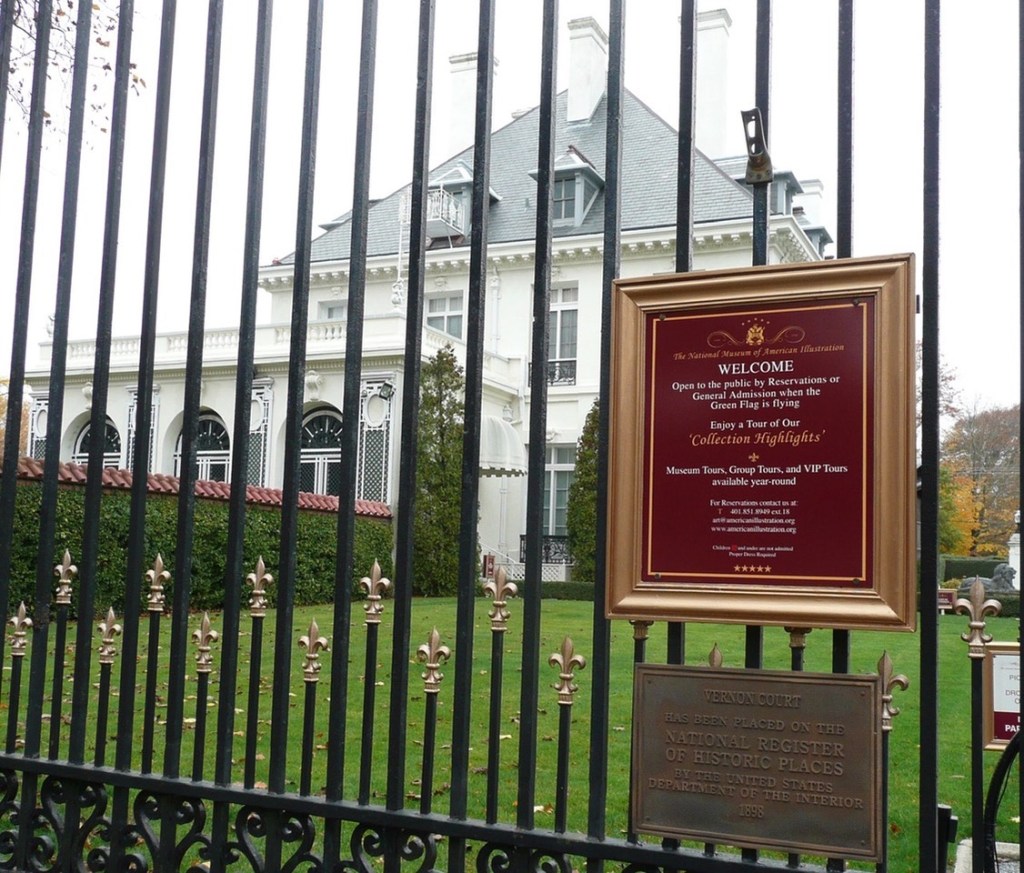
It’s easy to file these illustrators away in their ‘not-really-artists’ zone when you’re looking at their work in a glossy coffee table book. But when you stand in the presence of their originals in places like the Brandywine River Museum of Art, the Norman Rockwell Museum in Stockbridge Massachusetts, or The National Museum of American Illustration in Newport Rhode Island, it’s hard to deny them their due.
I once found a Parrish painting in The Metropolitan Museum of Art off Central Park in Manhattan. It wasn’t easy. It was mounted on a rack about knee high, with dozens of other small paintings above it. I’d never seen that particular image before, and it was hard to really appreciate the technique. The painting was locked in a metal cage.
 Douglas Cockell
I’ve been with you when you have discovered a painting in a museum (not a Parrish, a Wyeth I believe). I think it was somewhere in Florida. I remember your excitement. I love how your writing reflects your interest in art. Those three short sentences in the paragraph beginning “Parrish occupies..) really pop and add wonderful texture to your writing (which I always enjoy by the way). Nice to know the title of the next Requiem book – can’t wait.
LikeLike
Always interesting.
LikeLike
Hi Doug. An interesting post, which I have enjoyed as I sit drinking a latte.
I have made a note to look up Matthew Parrish, I’m sure I’ve seen his work, need to check.
I’m looking forward to your next book.
Enjoy the beautiful month of September, one of my favorites.
LikeLike