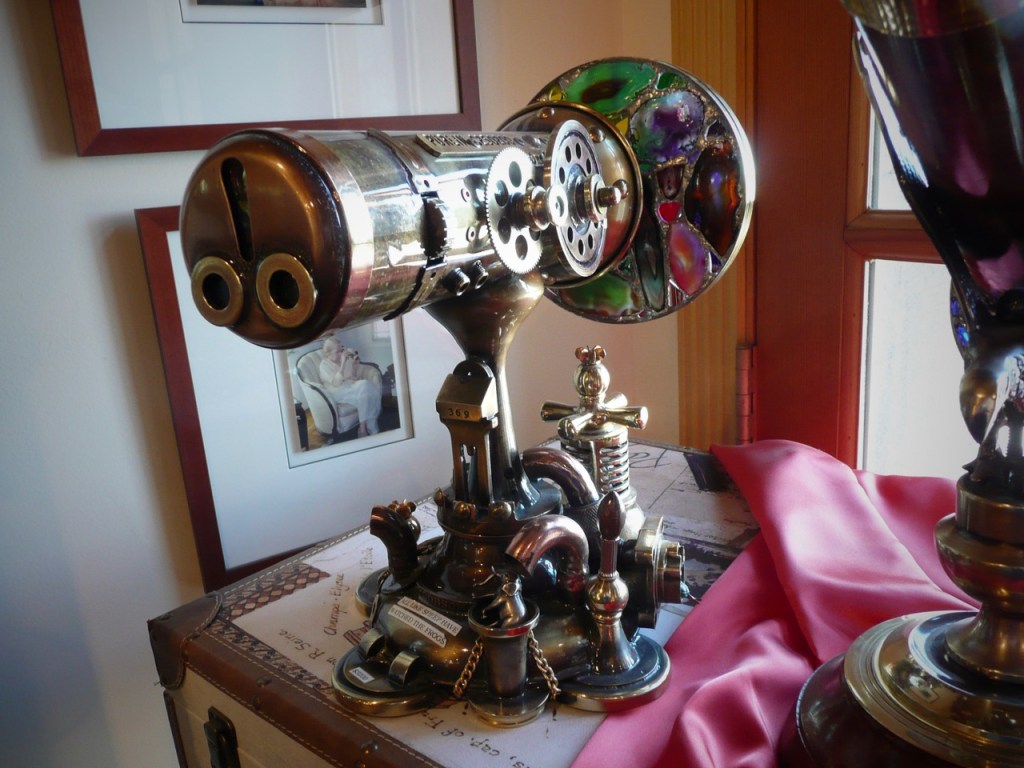
Influencer—that’s a word that shows up a lot now. Images that drift by us on movie screens or crowd out at us on social media. People we look up to or envy. The truth is we make up our lives as we go along; we didn’t come with an instruction book or a style guide. So, we notice things, and people who seem to have figured it all out. These exemplars may be as vulnerable to images from TV and concert stages as we are, but they’ve made a commitment and adopted a persona, they’ve digested influences and made them part of who they are and what they choose to do.
It can sound a bit pretentious when writers talk about their ‘influences’ because the history of literature is one of the most refined and capacious galleries of excellence imaginable. It’s as wide as the extremes of human talent and if the evolution of our language. It’s Caedmon, the Anglo-Saxon shepherd, being gifted with the first poem in the English language and it’s the institutional word-foundry we call Shakespeare, who couldn’t spell his name the same way twice.
In their youth, my father and mother were readers to some degree—I’m not sure how much since I don’t remember them reading at all—but at some point, they devoured the many novels of Jeffery Farnol, a writer of historical romances. He must have been big in the forties; they made movies of a couple of his stories. I inherited a whole bookshelf of his novels and, getting into the deliberately antique diction, I read them all myself. That shelf still sits there in my writing room and whispers genteel enigmas to me.
John Wyndham’s novels, The Kraken Wakes and The Midwich Cuckoos cast an early spell on me, but in retrospect, I can see how the very Britishness of their setting and the characters’ voices salved my ambivalence about being an immigrant in a brasher society.
There are a few contemporary writers that make me envious and better, but I started this off thinking about Richard Matheson. He’s a generation back, but as an anthologizer of his work said, many present-day authors write ‘in his house’.
Just a fast sampling: The Twilight Zone, I am Legend, What Dreams May Come, and Stir of Echoes. I got hold of a set of voice recordings Matheson made while researching Somewhere in Time, a romantic time travel novel, and I was able to get inside his head a little. I felt entirely at home there. Matheson enjoyed blending and overlapping genres: science fiction, horror, fantasy, and his novel Hell House is a perfect example—a deliberately conventional haunted house tale with a scientific twist. It just occurred to me that Shirley Jackson’s classic The Haunting of Hill House was also told from the perspective of a scientist, albeit a pretty open-minded one. (I am endeared to Shirley Jackson because she was once chased around a table by my favourite poet, Dylan Thomas.) Scientists make useful ‘Watsons’ blinking in wonder at Sherlock’s genius. They are the ultimate skeptics. A detective scrupulous about evidence is also a good man or woman to have around when you’re conjuring up spirits or the like.
In ghost stories, the reader is the skeptic, and rightly so. They are being offered a tale based on a far-fetched premise. Ironically, scientists are now the most vulnerable to the mystic unknown because that is precisely where modern cosmology and quantum theory has taken them.
 Douglas Cockell
Doug, you’re such a wordsmith. I get lost in thought when reading your written word.
LikeLike
Thanks Shirley!
Sent from my iPad
>
LikeLike